Our Story
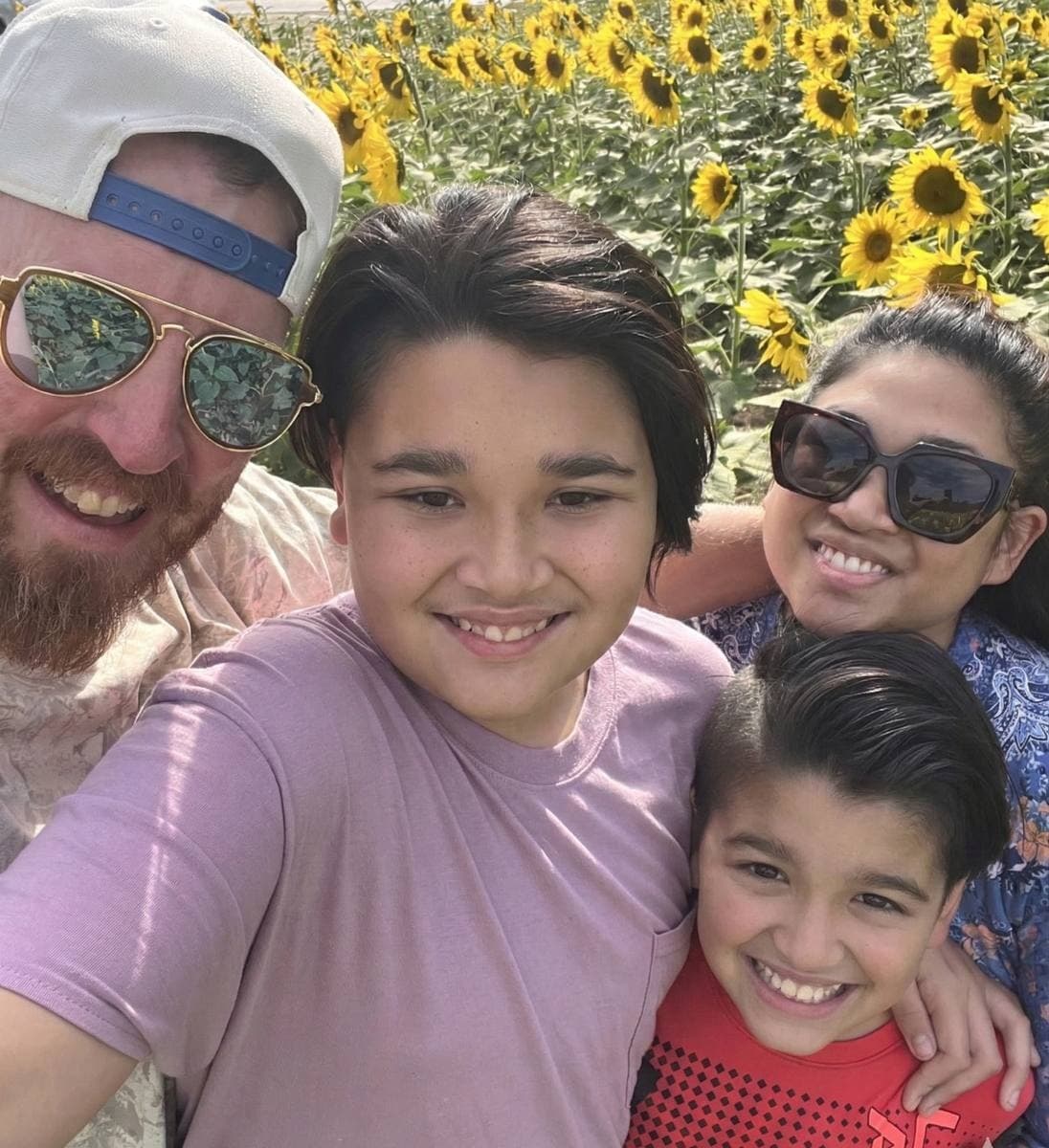
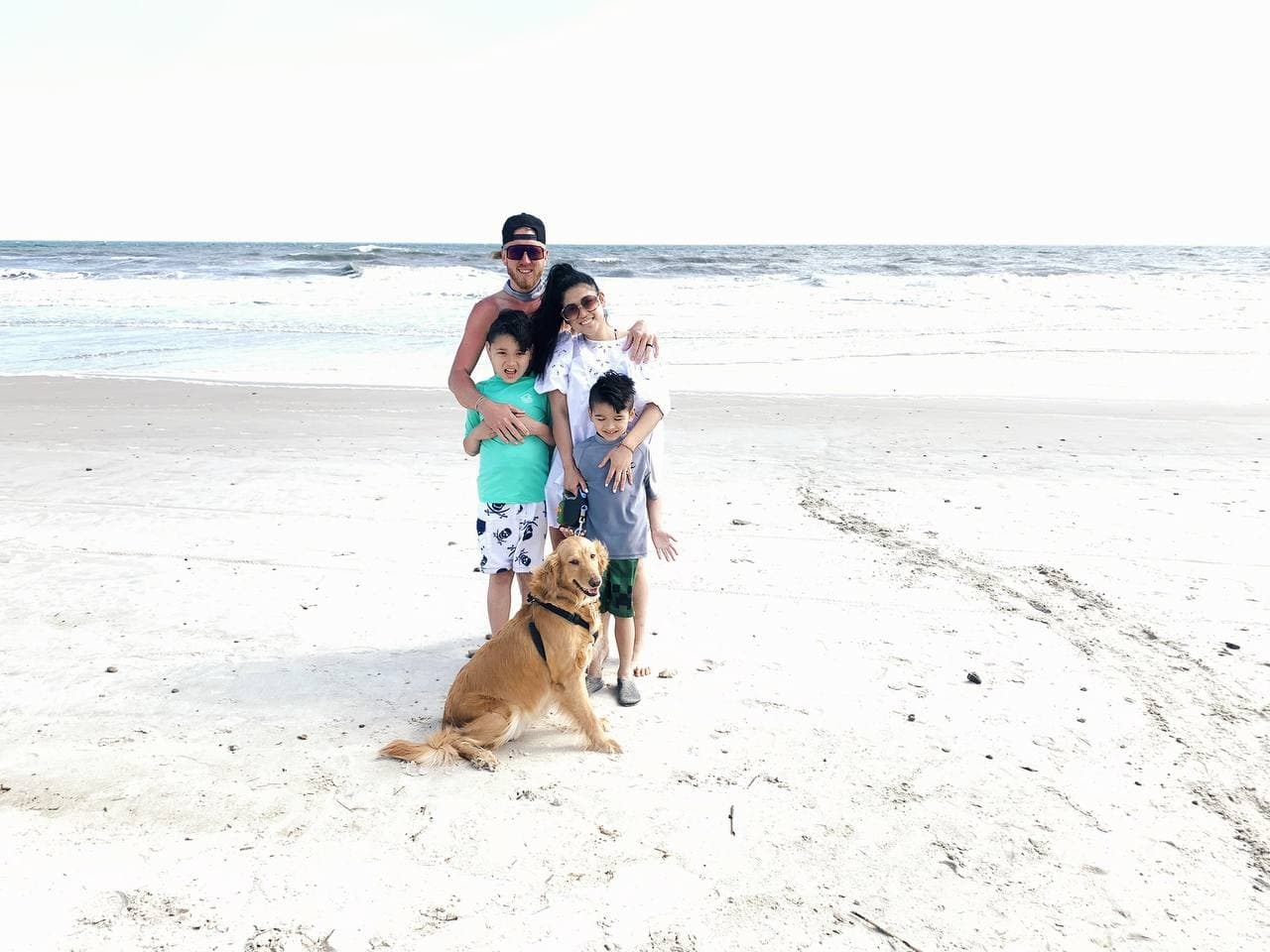
Sean & Kat, parents of Grayson, age 15. Twelve years of searching. One method that changed everything.
About Grayson
Grayson is 15 years old. He has autism. And for most of his life, we didn't know how much he understood.
We started early intervention when he was two. By four, we finally got the official diagnosis, though honestly, we already knew. We had held off on labeling him because we didn't want his therapists to use autism as a ceiling. We wanted them to keep pushing. Looking back, there was probably a little naivety in that too. It wasn't until our second son, Finn, was born that we could really see how different their development was. When the diagnosis came, we were prepared. We still held onto hope.
There's no such thing as a normal day with Grayson. Any autism parent knows that. He goes through phases. He has always needed things a certain way, like certain lights on and specific doors closed. He seeks constant sensory input: deep pressure, chewing, mouthing objects, the feeling of wind in his hair from a car window.
What Grayson loves is pure: swimming, jumping, swinging, bear hugs, being tickled. His hammock. Candy, chips, and cheese puffs. Bubble Guppies, Team Umizoomi, and Wonder Pets, the same shows since he was a baby and still favorites today. He can script entire episodes. He can tell you when he wants water, a snack, or the bathroom. And in the last year, something shifted. He started genuinely answering yes and no questions. Not just giving an answer to end the conversation. Actually meaning it.
We noticed early on that he seemed to understand more than he could say. You could see it in his eyes when he wanted something, like the words were right there but wouldn't come out. That frustration was real. It wasn't until his RPM sessions that we truly understood how much he'd been taking in all along.
He was always listening. We just didn't know it.
The Long Road Before RPM
Twelve years.
That's how long we searched before we found RPM. From the moment early intervention began and Grayson still wasn't talking, we started looking for answers.
We tried natural approaches first. The GAPS diet, CBD oil, GABA tea, acupuncture, fish oil, special vitamins. Anything we read or heard might help. Some of these made a difference with his behavior, and we still use a few of them. But none of it reached his communication. That was the gap we couldn't close, and we believed that gap was the source of most of his frustration.
Then came ABA. We lived in New York at the time, and ABA was everywhere, highly recommended and widely praised. We were hopeful. We read the reports: He can answer his name, his school, where he lives. So we asked him. Nothing. When we visited the classroom, we finally saw what the reports meant. They held up specific cards, asked in a specific way, and Grayson responded. He had memorized the visual cues. Without them, it didn't transfer. It wasn't real communication. It was performance.
The yes and no problem was similar. He learned to say "yup" to almost everything. Not because he meant it, just because it ended the question. No one had taught him that yes and no were supposed to mean something.
When we moved to South Carolina, Grayson's new teacher, herself on the spectrum, was the first person to name what we'd been watching for years. She told us his answers had no meaning behind them and that this was a fundamental gap. Over time, in her classroom, that changed. We started to see him actually stop and think before answering. The answers started to mean something.
We were never devastated through all of this. We never gave up. But twelve years of hoping and adjusting and adapting wears on you quietly.
How We Found RPM
It started with a podcast: The Telepathy Tapes.
We had never heard of RPM before. When we went looking for more information, there was almost nothing out there. The internet had basically nothing. But the stories on that podcast, parents describing their children, their behaviors, their struggles, it felt like they were describing Grayson. The scripting. The sensory seeking. The feeling that there was more going on inside than anyone could reach.
Were we skeptical? Absolutely. Grayson doesn't take well to new things. Getting him to sit for 45 minutes with a stranger, stay focused, engage, that's not easy. We'd been in too many sessions that ended in frustration or shutdown. We worried he wouldn't have the attention span. We worried he couldn't spell.
But there was urgency underneath the doubt. Grayson is 15. They say it gets harder to learn new things as you get older. Many of the RPM success stories didn't start until the teenage years, and some didn't reach independent spelling until their 20s. We felt like we were in a window that was slowly closing.
So we made the appointment.
The First Session
We were nervous walking in. We didn't know how Grayson would react to a new environment, a stranger, being asked to sit and focus. We braced for the worst.
Grayson spent most of the session scripting. He looked like he wasn't paying attention to anything his RPM instructor was saying, off in his own world like usual.
And then she started asking him questions about what she'd just read aloud. And he started pointing to the correct answers.
Every time.
She gave him an activity. Words written on paper, two boxes labeled living and non-living. He had to sort them. We looked at each other. This was something we didn't think he understood. Something we weren't sure he even had the concept of.
He completed it. Accurately.
We were in shock. Not because Grayson had surprised us for the first time, but because it was suddenly clear that we had been underestimating him. For years.
What We've Seen Since
Grayson has been doing RPM for seven months.
In that time, his attention span has transformed. He sits for the full 45-minute sessions now, focused and participating. His pointing to the letter board is faster and more confident, with less prompting each time. His OT once told us that writing might never be an option for him. He's tracing letters now.
Two moments floored us completely.
The first: we discovered that Grayson could identify the correct letters when given the sounds of the letters, not the letter names. That's phonetic awareness. That's reading readiness. We didn't know he had it.
The second: he started identifying full words correctly. We're still processing what that means. We're starting to wonder how much he can actually read.
Every session, we uncover something new. Something he knows, something he can do, that we didn't know was there. It never gets less shocking. It never gets less emotional.
What We Wish We'd Known
We wish we'd found RPM five years ago. Maybe ten.
Not because we're angry, but because we wonder how much further along Grayson would be. How much of his frustration over the years came from being capable of things no one tried to unlock.
The biggest shift RPM gave us wasn't a technique. It was an assumption: assume the child is capable. Always.
For years, we sat through IEP meetings and heard what Grayson couldn't do. What he might never do. Schools teach in steps, and if a child can't master step one, they don't move to step two. But that doesn't mean a child can't do step five. Or step eight. The steps aren't the ceiling.
We wish someone had told us that earlier. We wish we had always assumed Grayson was capable, because looking back, he was. He just needed someone to give him the right key.
Why We Built This
When we first heard about RPM and went looking for information, we found almost nothing. Finding an RPM therapist felt nearly impossible. We were starting from zero with no map.
That's why The Lost Puzzle Piece exists.
We want every autism parent who lands here to feel two things: you are not alone, and help when feeling doubt.
Grayson's story isn't finished. Neither is yours.
— Sean & Kat
Ready to find a provider?
Search our directory of certified RPM, S2C, and Spellers Method providers across the United States.
Search the Directory